

On 1 November, India reported gross GST collections of ₹2.31 lakh crore for October, an increase of 22.9% from a year earlier, with import-related revenue growing substantially faster than domestic receipts. In Delhi, thousands demonstrated against the Election Commission’s voter-roll revision exercise. The government also notified new civil aviation rules, while Digi Yatra began international passenger trials at seven airports. ¹ ⁴ ⁶ ⁸
“The sustained growth in import-linked collections underscores the need to further push domestic manufacturing capabilities.” — Saurabh Agarwal, Tax Partner, EY India, 1 November 2026, quoted by NDTV Profit.
The tax figures indicate stronger revenue mobilisation, but do not by themselves establish how much domestic demand has improved. Elsewhere, the day’s developments raise questions about the operation of public institutions: how electoral records are verified, when governments can intervene in airfares and what safeguards accompany the expansion of digital identification at airports.
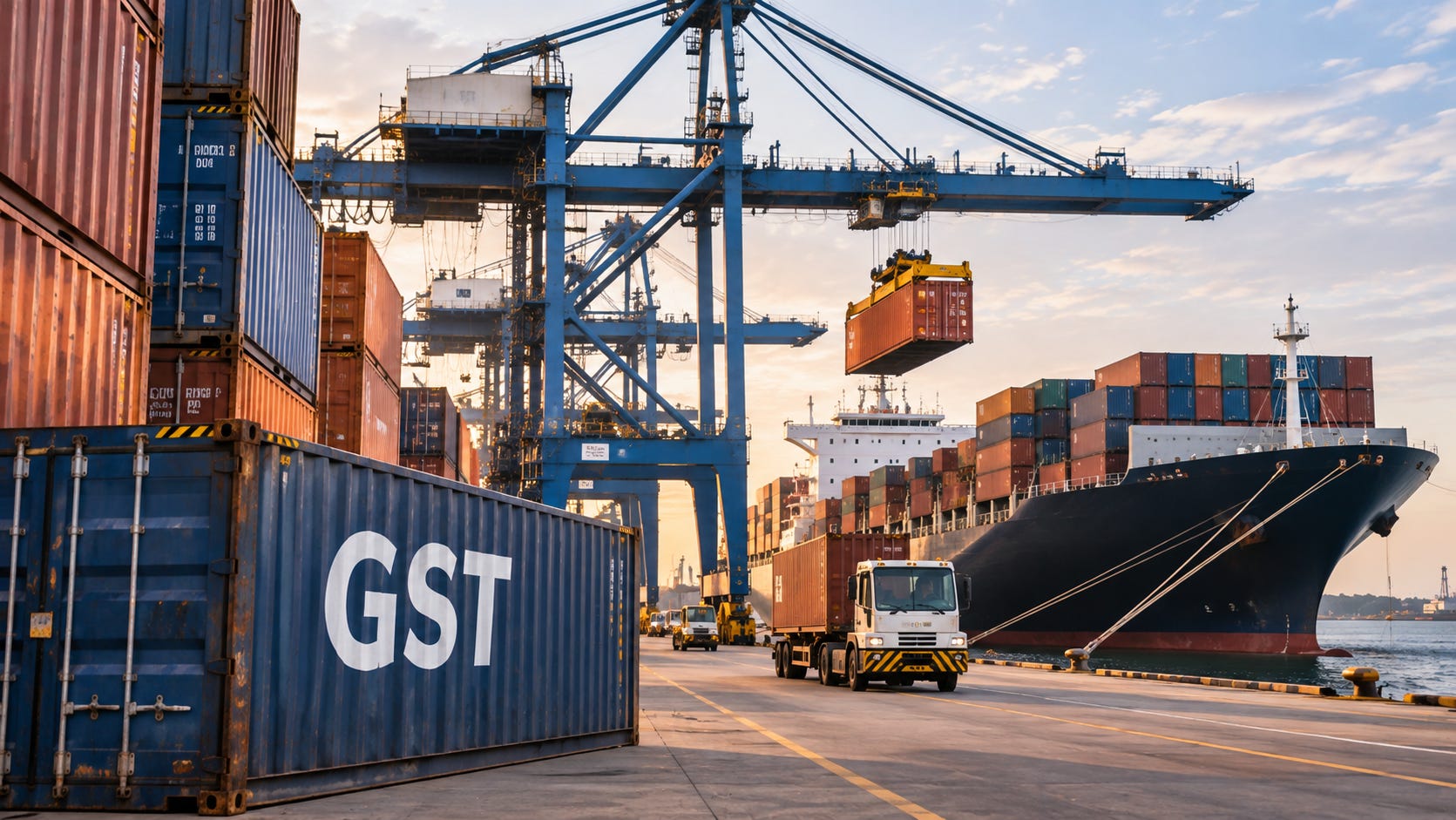
GST collections cross ₹2.31 lakh crore, led by import-linked revenue
Key facts
Gross GST revenue: ₹2,31,290 crore in October 2026, up 22.9% year on year.
Net GST revenue: ₹2,03,356 crore, up 25.6% after refunds.
Domestic revenue: ₹1,59,044 crore, an increase of 15.8%.
Import-linked revenue: ₹72,246 crore, up 42.2%.
Refunds: ₹27,934 crore, an increase of 6.5%.
April–October collections: approximately ₹14.78 lakh crore in gross GST revenue, up 13.2% from the comparable period. ¹ ²
India’s indirect-tax receipts recorded another strong month, according to provisional figures released by the Finance Ministry on Sunday.
Gross collections rose to ₹2.31 lakh crore, while net revenue after refunds crossed ₹2 lakh crore.
The increase was not distributed evenly between domestic transactions and imports.
Domestic GST collections rose 15.8% from a year earlier, while tax revenue associated with imports increased 42.2%.
Import-related GST contributed approximately 31.2% of total gross collections, based on our calculation.
That difference is significant because it complicates an interpretation of higher GST receipts as evidence purely of stronger household consumption.
Import-related revenue can rise because of higher volumes, increased prices, changes in product composition or currency movements.
The available figures do not isolate these effects.
Domestic revenue growth nevertheless remained substantial, reflecting a combination of taxable economic activity, prices, compliance and other factors.
The comparison requires care
The reported annual increase of 22.9% is based on the government’s comparable October 2025 figure of ₹1,88,125 crore.
Hindustan Times reported that the October 2025 figure was ₹1,95,936 crore before adjustment for the compensation cess subsequently phased out.
Using that unadjusted historical amount would produce a different annual growth rate. The officially reported 22.9% comparison therefore relies on an adjusted base. ³
The October receipts also largely reflect transactions from an earlier reporting period. They should not be attributed to the GST amendments that took effect only on 1 November.
Those amendments include changes to post-supply discounts and provisional refunds for eligible businesses.
Analysis: The revenue figures are positive for government collections, but their composition deserves as much attention as the headline growth rate.
Import-linked receipts grew almost three times as quickly as domestic collections in percentage terms. This may reflect stronger demand for foreign goods or manufacturing inputs, higher import values, or other external factors.
Without examining import volumes, prices and product categories, the figures cannot establish which explanation dominates.
Next milestone: November GST collections, expected to be reported in early December, will provide another data point on whether the current pace of tax-revenue growth is sustained.
Thousands protest voter-roll revisions as the Election Commission defends its process
Key facts
Event: opposition-led protest in New Delhi on 1 November.
Location: Ramlila Maidan, with demonstrators marching through central Delhi.
Demand: resignation of Chief Election Commissioner Gyanesh Kumar.
Dispute: the Special Intensive Revision (SIR) of electoral rolls.
Scale: Reuters reported that more than 130 million entries had been removed during the wider revision exercise.
Commission’s position: revisions are intended to remove ineligible, duplicate and outdated entries; eligible voters wrongly excluded can seek restoration. ⁴
Thousands of demonstrators gathered in Delhi on Sunday to protest the Election Commission’s handling of voter-list revisions.
The demonstration was organised by opposition parties and led by Congress leader Rahul Gandhi, with participants calling for Chief Election Commissioner Gyanesh Kumar to resign.
Opposition parties have accused the Commission of conducting a process that could disproportionately exclude particular communities and confer an electoral advantage on the ruling Bharatiya Janata Party.
The Election Commission denies political bias.
It maintains that the exercise is intended to identify people who have died, permanently relocated, cannot be traced or appear more than once on electoral registers.
The BJP has rejected the opposition’s allegations and accused its political rivals of undermining confidence in legitimate electoral procedures. ⁴
What do the deletion figures establish?
Reuters reported that more than 130 million names had been removed from electoral rolls through the revision process.
The scale is substantial, but it requires careful interpretation.
Entries classified as deceased, permanently shifted, duplicate or untraceable are not necessarily equivalent to eligible individuals conclusively and wrongfully deprived of the vote.
Nor does the aggregate number establish how many people successfully re-enrolled following a correction or objection.
These distinctions matter when evaluating claims made by both the government and opposition parties.
One protester interviewed by Reuters said that four members of her family had been removed from electoral records after being incorrectly classified as having moved away.
That is an individual allegation requiring verification, rather than evidence establishing the accuracy of every broader claim.
Deadlines have already changed
The Election Commission has extended several deadlines following legal proceedings.
According to The Indian Express, final electoral rolls are now scheduled for publication on 30 November in Maharashtra, Haryana, Andhra Pradesh, Telangana and Nagaland, and on 22 December in Delhi.
The revised timetable gives additional time for claims, objections and related verification procedures. ⁵
Analysis: The central institutional question is how accurately the electoral revision system distinguishes outdated records from eligible voters.
Removing duplicate or invalid entries is an ordinary part of maintaining electoral rolls. Incorrectly excluding eligible voters, however, has direct consequences for electoral participation.
The public evidence needed to assess the exercise includes final deletion figures, reasons for exclusions, successful reinstatements and the outcomes of complaints.
Next milestone: The extended claims-and-objections deadlines and publication of final electoral rolls. These will provide further evidence of how many questioned entries are corrected before the process concludes.
New aviation rules retain market pricing, with emergency powers for the government
Key facts
Regulations: Bharatiya Vayuyan Niyam, 2026.
Notification: published in the Gazette of India on 31 October.
Effective date: 1 January 2027.
Previous framework: Aircraft Rules, 1937.
Pricing provision: Rule 192.
Government intervention: permitted through written directions in extraordinary circumstances.
Consumer disclosure: airlines must show the total amount payable and separately disclose fare components, taxes, fees, cancellation charges and refund conditions. ⁶ ⁷
India has notified a new civil aviation regulatory framework that will replace rules dating back nearly nine decades.
The Bharatiya Vayuyan Niyam, 2026, governs areas including aircraft registration, airworthiness, aviation personnel, airport operations and airline tariffs.
Its provisions are scheduled to become effective on 1 January 2027.
The airfare rules retain a market-based approach.
Airlines will generally remain responsible for establishing fares based on commercial considerations, including operating costs.
The Directorate General of Civil Aviation will monitor tariffs, and airlines must publish fares and provide passengers with a breakdown of applicable charges.
Rule 192 also permits the Central Government to issue written directions when it determines that extraordinary circumstances justify intervention in the public interest.
Such directions must be proportionate and limited to a specified period. ⁷
The wording matters.
The new rules do not introduce a general ceiling on all airfares. Nor do they guarantee that fares will remain stable during periods of high demand.
Instead, they preserve commercial pricing while providing a specific mechanism for exceptional intervention.
The role of the Supreme Court
The rules follow judicial scrutiny of airline pricing practices.
In October, the Centre informed the Supreme Court that the new aviation rules had received administrative approval and would be formally published.
The Court asked the government to place the finalised rules before it at the next hearing, scheduled for 16 November. ¹¹
Analysis: The framework attempts to balance commercial flexibility with public accountability.
Airlines retain the ability to vary prices, while passengers receive more explicit information about charges.
The unresolved issue is how the government will define an extraordinary situation and apply its intervention powers without creating arbitrary or unpredictable pricing rules.
The distinction between regulatory authority and actual enforcement will become important.
Next milestone: The Supreme Court hearing on 16 November and the commencement of the new rules on 1 January 2027. Both remain separate events.
Digi Yatra begins international trials at seven airports
Key facts
Trial period: November–December 2026.
Airports: Delhi, Bengaluru, Hyderabad, Kochi, Mumbai, Chennai and Amritsar.
Eligible users: Indian nationals holding compatible e-passports.
Participating airlines: selected international flights operated by Air India and IndiGo.
Technology: facial recognition supported by an e-passport-based verifiable credential.
Existing adoption: more than 26.5 million registered users and 110 million recorded journeys across 39 domestic airports.
Wider rollout: planned for 2027, subject to trial feedback. ⁸
The Ministry of Civil Aviation announced on Sunday that Digi Yatra had begun trials for international passengers at seven Indian airports.
The system, already used for domestic journeys, allows eligible passengers to use digital identity verification at designated airport access points.
For international travel, participants must create a verifiable credential through the Digi Yatra mobile application.
The process requires scanning the machine-readable portion of an e-passport, reading its embedded chip through a compatible smartphone’s NFC capability and completing a selfie-based identity verification.
The resulting credential is stored in the application’s wallet on the passenger’s device.
During the trials, eligible travellers can use the facility at participating terminal entrances, security holding areas and boarding gates where the necessary equipment is installed. ⁸
The service does not replace immigration clearance, airline document verification or the requirement to carry valid travel documents.
It is also not yet available to every international traveller.
The initial trial is limited to eligible Indian e-passport holders travelling on selected services.
The policy question beyond convenience
Digi Yatra is part of a wider effort to reduce repeated identity checks and improve passenger movement through airports.
The Ministry reports that the platform has already facilitated more than 110 million domestic journeys.
That figure represents recorded journeys, not 110 million distinct users.
The planned international expansion could extend the system’s practical role, but it also raises questions that matter whenever identity technology is deployed at scale.
These include how passengers give consent, how credentials are protected, what information is retained at individual airport touchpoints and whether non-participating travellers retain convenient alternatives.
The Ministry’s 1 November announcement describes credential creation and device storage. It does not provide a comprehensive independent assessment of data protection across every participating airport system.
Analysis: The potential operational benefit is reduced friction at airport checkpoints.
Whether the system becomes broadly useful depends on interoperability, passenger adoption and the ability to deliver convenience without making digital biometric participation effectively compulsory.
The trials provide an opportunity to examine these issues before a wider rollout.
Next milestone: Completion of the November–December trial period and the Ministry’s assessment of passenger feedback ahead of the planned 2027 expansion. No precise nationwide launch date has been announced.
The day ahead
2 November — Manufacturing data: India’s October manufacturing Purchasing Managers’ Index is scheduled for release. It will provide a more direct indication of factory activity than GST collections alone. ⁹
2 November, approximately 4:30 p.m. — Renewable energy summit: Prime Minister Narendra Modi is scheduled to inaugurate the Bharat Renewable Energy Summit & Expo 2026 at Bharat Mandapam, New Delhi. The event runs from 2 to 5 November, with participation expected from more than 130 countries. ¹⁰
2 November — Indian equities: Stock exchanges reopen after the weekend. Investors will assess corporate earnings, international energy prices and the latest domestic fiscal data.
4 November — Services activity: India’s October services PMI is scheduled for publication, offering further evidence on business activity outside manufacturing. ⁹
16 November — Aviation regulation: the Supreme Court is scheduled to review the government’s finalised aviation rules in proceedings concerning airfare practices. ¹¹
30 November — Electoral rolls: publication of final revised rolls is scheduled in several states, including Haryana and Maharashtra. Delhi’s final-roll publication is scheduled for 22 December. ⁵
Related reading
Rupee posts its best month since February as India’s reserves fall for seventh week — The Power Brief, 31 October 2026.
Sources
Reuters, India’s October net goods and services tax collection rises 25.6% year-on-year, 1 November 2026.
https://www.reuters.com/world/india/indias-october-net-goods-services-tax-collection-rises-256-year-on-year-2026-11-01/Mint, GST collections hit ₹2.31 trillion in October as import revenue jumps 42%, 1 November 2026.
https://www.livemint.com/economy/gst-collections-october-2026-import-revenue-growth-india-11793517761930.htmlHindustan Times, India records ₹2.31 lakh crore GST collections in October, 1 November 2026.
https://www.hindustantimes.com/business/india-records-2-31-lakh-cr-gst-collections-in-oct-2nd-highest-since-2017-rollout-101793525201768.htmlReuters, Thousands join Indian opposition protest demanding poll chief’s resignation, 1 November 2026.
https://www.reuters.com/world/india/indian-authorities-tighten-security-ahead-big-opposition-march-delhi-2026-11-01/The Indian Express, Election Commission extends voter-roll revision deadlines, 30 October 2026.
https://indianexpress.com/article/india/election-commission-final-sir-voter-rolls-filing-claims-objections-delhi-maharashtra-andhra-pradesh-telangana-haryana-nagaland-deadline-extended-10942562/Business Standard, New aircraft rules to replace 1937 framework, take effect from January 1, 1 November 2026.
https://www.business-standard.com/industry/aviation/new-aircraft-rules-to-replace-1937-framework-take-effect-from-january-1-126110100896_1.htmlMinistry of Civil Aviation, Bharatiya Vayuyan Niyam, 2026, Gazette notification published 31 October 2026, Rule 192.
https://dashboard.policyindex.ai/in/gazette/notification-for-bharatiya-vayuyan-niyam-2026-flvuh5Ministry of Civil Aviation / PIB, Digi Yatra Begins International Passenger Trials at Seven Airports, 1 November 2026.
https://www.pib.gov.in/PressReleseDetailm.aspx?PRID=2331200&lang=1®=1Asian Development Bank, Regional Economic Calendar — November 2026.
https://aric.adb.org/economic-calendar?date=2026-11Prime Minister’s Office / PIB, PM to Inaugurate Bharat Renewable Energy Summit & Expo 2026 on 2 November, 1 November 2026.
https://www.pib.gov.in/PressReleseDetailm.aspx?PRID=2331222&lang=1®=3Business Standard / PTI, Plea on airfare spikes: Centre informs Supreme Court new rules approved, 16 October 2026.
https://www.business-standard.com/amp/industry/aviation/plea-on-air-fare-spikes-centre-informs-supreme-court-new-rules-approved-126101600767_1.htmlNDTV Profit, Net GST mop-up surges past ₹2.03 lakh crore in October, 1 November 2026.
https://www.ndtvprofit.com/economy/net-gst-mop-up-surges-past-rs-2-03-lakh-crore-in-oct-theres-a-42-import-tax-revenue-link-12266408
Updated: Late evening, 1 November 2026 (IST). Corrections: none at preparation.
This brief draws on government announcements, regulatory documents, published financial data and attributed journalism. It includes no original interviews or on-the-ground reporting. Interpretation is labelled as analysis. The electoral-roll allegations are attributed and have not been independently verified by The Raisina Post.
Information cutoff: Approximately 11:45 p.m. IST, 1 November 2026. Scheduled events and data releases for 2 November are presented as forthcoming, not completed.

The next briefing, in your inbox
The Raisina Post’s Editorial Desk sends a clear account of the decisions, data and global moves shaping India each morning. Subscribe free, or share this edition with someone who follows the story.
Helpful to see the import-linked and domestic figures separated, and the caution that the headline does not by itself show stronger household demand. A practical angle for small businesses: since the November amendments on post-supply discounts and provisional refunds are now in effect, it is worth confirming with your CA how your invoicing and credit note records will be treated.