

“As AI reshapes the global economy, data centres are becoming critical strategic infrastructure.” — Debjani Ghosh, NITI Aayog, 14 October 2026; source.
India is preparing for a larger AI economy, but the practical argument has moved from algorithms to electricity, water and land. A new NITI Aayog framework asks states to examine those costs before backing data-centre projects; on Sunday, the Reserve Bank of India opened its own computing and cyber-training facilities in Bhubaneswar. Today’s brief follows the infrastructure, then turns to Europe’s trade gateway and a BRICS meeting in Delhi.
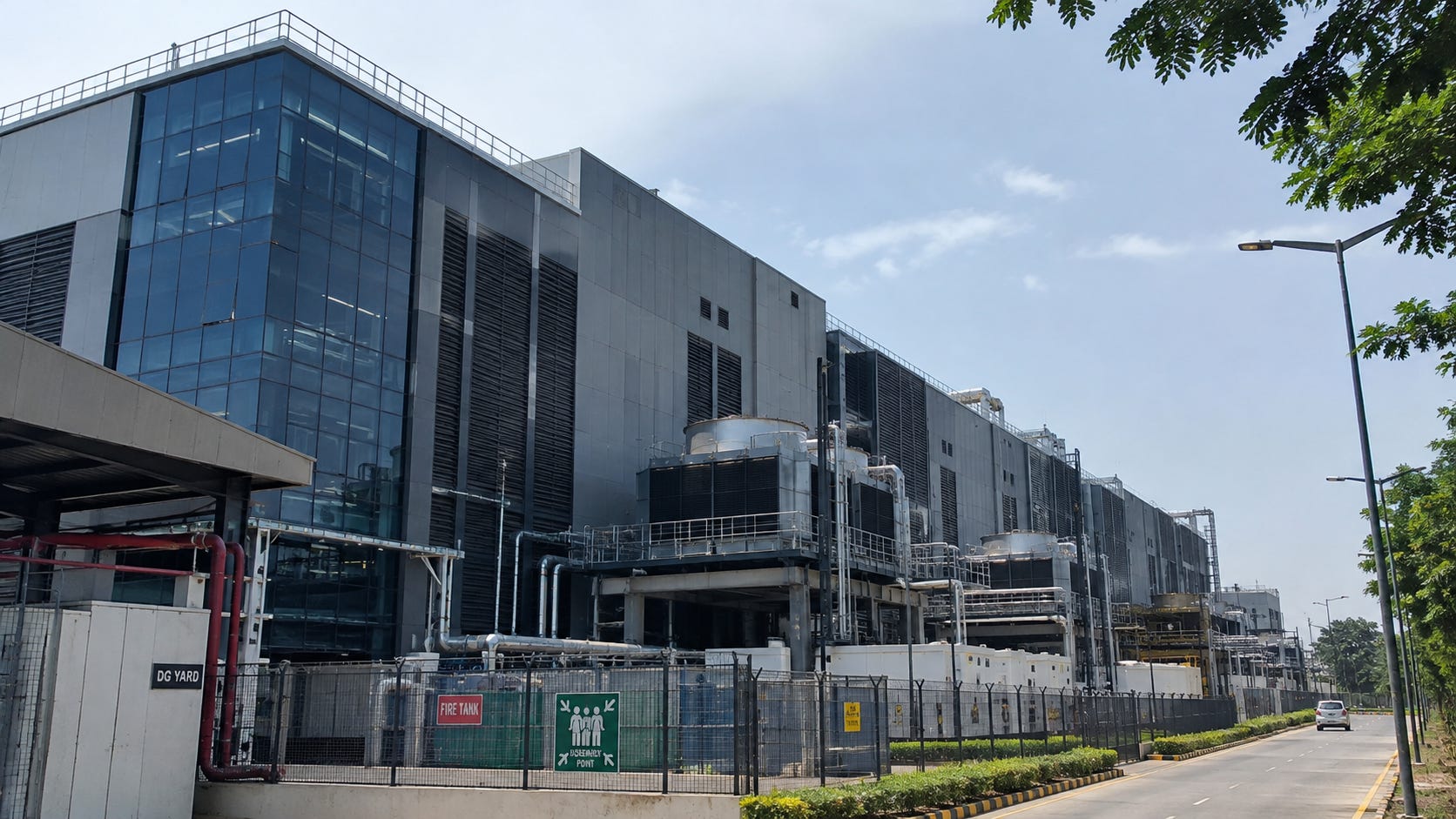
AI growth gets a resource test
NITI Aayog’s Frontier Tech Hub has given states a framework for evaluating data-centre proposals. Released on 14 October, it asks officials to examine five areas: power and energy; water and cooling; location and environmental sustainability; economic and strategic value; and the governance needed to deliver a project. The document is guidance for decisions, not a new permit or a national restriction on AI investment.
The scale explains the urgency. NITI Aayog puts India’s data-centre capacity at about 1.5 gigawatts, up from roughly 375 megawatts in 2020. Those are estimates of facility capacity, not figures for electricity consumed or new capacity approved this month. Demand for AI is one driver alongside cloud services and other computing. Treating all data centres as AI facilities would overstate the claim.
The framework asks states to test grid readiness and net draw, consider renewable power and storage, assess water stress at the basin level, and examine the effect on public water supplies. It also calls for plans for wastewater, batteries and other waste. These are practical questions for a state deciding where a large installation belongs; an investment headline alone does not answer them.
There is an economic test too. NITI Aayog says states should distinguish facilities that rent space and power to others from those that provide active computing services, and tie incentives to measurable outcomes. That matters because the value captured locally can differ even when two proposals advertise similar capacity. The document does not publish a national cost-benefit calculation or prescribe a single threshold at which a project should be refused.
The government’s stated case is that domestic computing capacity can support technological development and competitiveness. Its own framework recognises the strain on local infrastructure. Reuters reported this month that New Delhi plans a data-centre policy and that the junior IT minister raised the question of protecting consumers from higher power costs. The scope and date of that policy were not specified in the report.
The next test is implementation: whether state project appraisals publish their assumptions on power, water and benefits, and whether the central policy gives those checks force. For now, the framework describes what officials should measure; it does not show how any particular proposed facility scores.
RBI opens a new home for critical systems
Prime Minister Narendra Modi inaugurated the Reserve Bank of India’s data centre and cybersecurity training institute in Bhubaneswar on 25 October. A government pre-event note says four data centres are intended to host mission-critical payment and settlement systems and other RBI initiatives. The purpose, it says, is secure, resilient and scalable computing for the central bank and wider financial sector.
The distinction from the AI buildout matters. These are financial-system facilities, not an announcement that the RBI has launched an AI platform. Their immediate public value lies in continuity and security for systems on which banks and payments depend. The training institute adds a separate capacity-building function. The official announcements do not provide a public before-and-after reliability measure, migration schedule, or independent assessment of cyber readiness.
The RBI’s opening illustrates why the word infrastructure has become more than a metaphor in India’s digital economy. Servers, backup capacity, trained staff and incident response determine whether a service remains available when something fails. The observable next step will be RBI disclosures on what has moved into the new centre and how resilience is tested. Until then, claims of a measured improvement would be premature.
Rotterdam puts Europe’s trade route in focus
Commerce and Industry Minister Piyush Goyal began a Netherlands visit on 25 October and toured the Port of Rotterdam with its chief executive, Boudewijn Siemons. The commerce ministry framed the port as a gateway for Indian goods into Europe and linked the visit to the India-EU trade agreement. Rotterdam’s reach matters because tariff concessions, when applicable, are only part of an exporter’s journey; freight links, customs handling and delivery times also shape whether a sale works.
The ministry described opportunities it expects from the agreement. It did not announce a new port deal, a change in cargo volumes or a fresh export target during the visit. The practical question for Indian firms is which product lines can use the agreement’s terms and how their goods move onward from a European entry point. That will depend on the agreement’s operative provisions and firms’ supply chains, rather than a ministerial tour alone.
The next evidence to watch is any announced commercial commitment or implementation detail from the visit, followed by actual trade flows. A promising route and an increase in shipped goods are different things.
BRICS parliaments meet in New Delhi
The 12th BRICS Parliamentary Forum is scheduled for 26–27 October in the Central Hall of Samvidhan Sadan. According to the Lok Sabha Secretariat, delegates are to discuss institutional resilience, human-centred AI and digital technology, parliamentary cooperation on global governance, and sustainability. Speaker Om Birla met delegations from Russia, Cuba, Egypt and Belarus ahead of the gathering.
This is a parliamentary forum, not a treaty negotiation or a vote that binds governments. It can still matter: legislators compare how their institutions oversee technology and public policy, and delegations can put issues on a shared agenda. But its effect should be judged by the joint statement and any subsequent parliamentary work, not by the ambition of its session titles.
The secretariat said delegation officials were to finalise a joint statement on 25 October. At the time of this briefing, we have not verified a published final text. The statement and the forum’s closing record on 27 October are the next documents to read.
The day ahead
On Monday, 26 October, the BRICS parliamentary programme is due to open in Delhi. Watch for the final joint statement, especially any specific commitments on AI oversight or institutional cooperation. For the AI infrastructure story, watch for the promised national data-centre policy and for state assessments that publish power and water assumptions. Neither a policy launch date nor a state scorecard has been confirmed in the sources reviewed here.
Sources
1. NITI Aayog, Data Centre Evaluation Framework announcement, 15 October 2026: https://www.pib.gov.in/PressReleasePage.aspx?PRID=2323840&lang=1®=48
2. NITI Aayog, full evaluation framework: https://www.niti.gov.in/sites/default/files/2026-10/Data-Centre-Evaluation-Framework-to-Help-States-Plan-for-Sustainable-Growth.pdf
3. Reuters, India’s planned data-centre policy, 14 October 2026: https://uk.marketscreener.com/news/india-to-roll-out-data-centre-policy-as-concerns-grow-over-power-use-ce785dd2da8bfe20
4. Prime Minister’s Office, RBI facilities inaugurated, 25 October 2026: https://www.pib.gov.in/PressReleasePage.aspx?PRID=2328250&lang=1®=3
5. Prime Minister’s Office, pre-event details of RBI facilities, 24 October 2026: https://www.pib.gov.in/PressReleasePage.aspx?PRID=2327861&lang=1®=3
6. Commerce Ministry, Netherlands visit, 25 October 2026: https://www.pib.gov.in/PressReleseDetailm.aspx?PRID=2328254&lang=2®=48
7. Lok Sabha Secretariat, BRICS forum programme, 22 October 2026: https://www.pib.gov.in/PressReleseDetailm.aspx?PRID=2326629&lang=1®=3
8. Lok Sabha Secretariat, pre-forum meetings, 25 October 2026: https://www.pib.gov.in/PressReleseDetailm.aspx?PRID=2328196&lang=1®=3

The next briefing, in your inbox
The Raisina Post’s Editorial Desk sends a clear account of the decisions, data and global moves shaping India each morning. Subscribe free, or share this edition with someone who follows the story.