

“Experience from PLFS 2026 showed that the existing arrangement did not capture an adequate number of digital platform workers.” — National Statistics Office, in its 23 October consultation notice.
India’s next labour survey could be better equipped to find the people who work through apps. The proposal is still open for comment, and it comes as new industry data shows steel consumption rising faster than output. Elsewhere, New Delhi is testing a much larger engineering-export ambition while pursuing industrial ties with Germany.
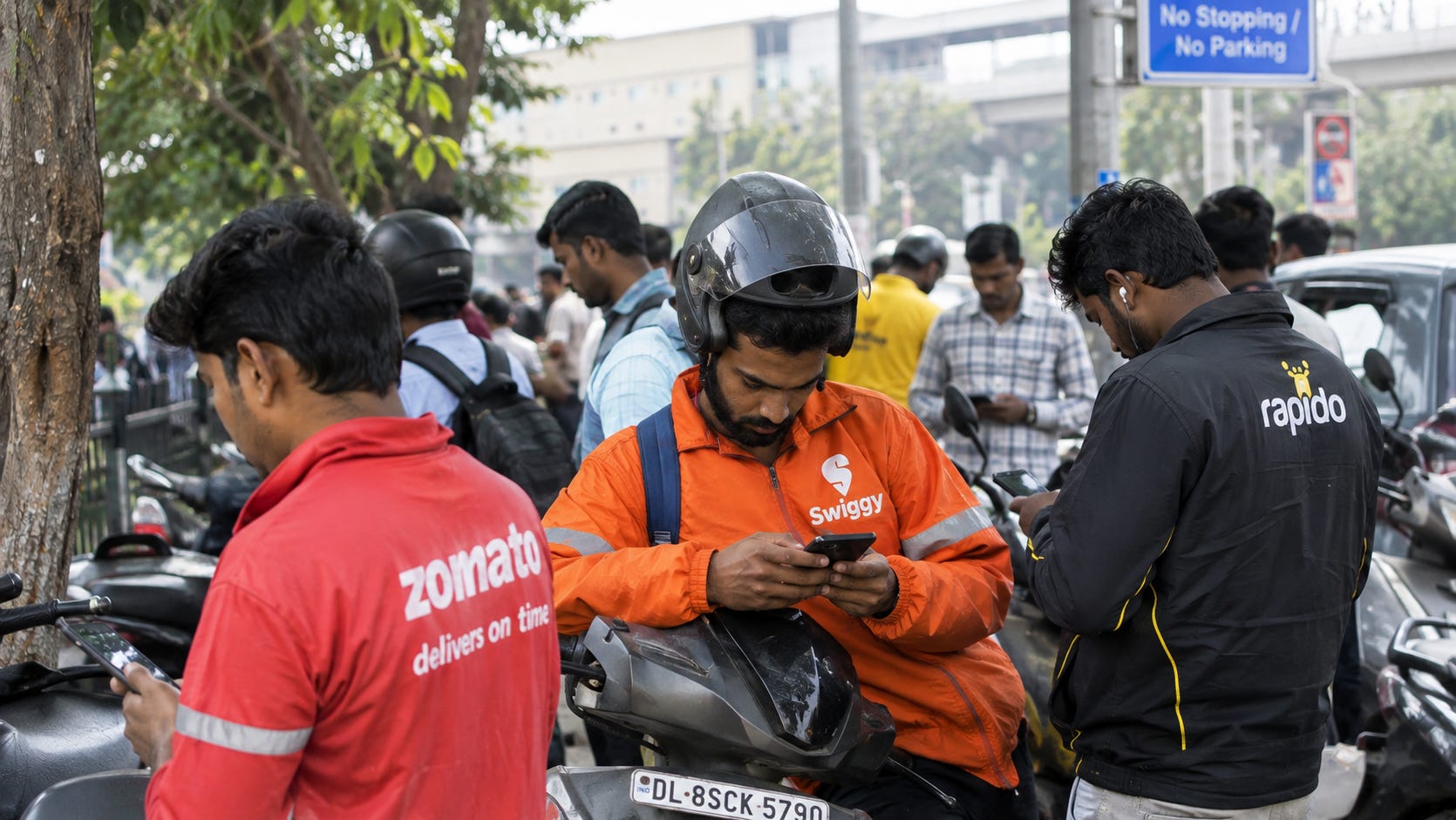
A survey designed to see more kinds of work
The National Statistics Office has proposed changing the Periodic Labour Force Survey from January 2027. Its most consequential addition is a separate sampling category for digital platform workers. The office says its 2026 experiment did not capture enough of them under the existing design.
That matters because a survey can miss a group even when its questions are well worded. If too few platform-working households enter the sample, the resulting figures cannot say much reliably about the people driving, delivering or taking other work through digital platforms. A dedicated second-stage stratum is intended to improve coverage; it is not, by itself, a new estimate of how many such workers exist.
The proposal would identify households with a member who has undertaken digital platform work during the specified reference period. The screening question would be asked in both rural and urban areas. The office proposes four second-stage strata in rural areas and five in urban areas, with 14 households canvassed in each selected first-stage unit. Those are survey-design details, not employment targets.
The wider refresh would draw the 2027–28 sample from an updated frame intended to reflect urbanisation, changes to districts and newer urban areas. For the first three months of 2027, monthly bulletins would pool samples from the outgoing and incoming frames. The office says it would withhold relative standard error estimates for those three months. That transition deserves attention when readers compare early-2027 labour numbers with older results.
The schedule would also ask people aged 15 and above about own-use production, unpaid household and care work, volunteering and unpaid trainee work. These questions would be asked on the first visit in rural and urban areas, allowing annual reporting. They could make currently less visible work easier to describe, but the proposal does not mean unpaid activity will suddenly be classified as paid employment.
The National Statistics Office invited comments within 15 days of its 23 October notice. What to watch is the final sampling design and, after it begins, whether published tables actually offer usable, clearly qualified estimates for platform workers and unpaid activity.
Steel demand rises, but imports rise too
India consumed 85.0 million tonnes of finished steel in April–September 2026, up 7.6% from the same period a year earlier, according to provisional Joint Plant Committee data released by the steel ministry on Friday. Finished-steel production grew 4.1% to 82.0 million tonnes over the same six months.
The contrast is the useful number here. Stronger domestic use did not eliminate reliance on overseas supply: finished-steel imports rose 23.8% to 4.14 million tonnes, while exports rose 26.2% to 3.55 million tonnes. India remained a net importer by volume for the half-year. The ministry lists China and South Korea as its two largest sources of finished-steel imports, at 1.32 million and 1.29 million tonnes respectively.
Prices also moved. The ministry’s October average for 10 mm TMT bars was ₹66,645 per tonne, including GST, across four metro markets, 26.0% higher than a year earlier. Its hot-rolled coil measure was ₹77,620 per tonne, up 31.6% year on year. These are specified product and city averages, not a universal price for all steel purchased in India.
Analysis: demand growing faster than domestic finished-steel output can support imports even when local mills make more steel. The release does not establish why each buyer chose an imported product, so quality, price and grade-specific explanations would need separate evidence. The next monthly data will show whether the gap persists beyond the first half of the financial year.
An export target meets the question of inputs
The commerce department and EEPC India met on 23 October to sketch a path towards $250 billion in engineering-goods exports by 2030. A joint secretary also suggested revisiting a $300 billion ambition. These are goals discussed at a strategy meeting, not forecasts or commitments already delivered.
The department said engineering exports exceeded $70 billion in the first six months of FY 2026–27, nearly 20% above the corresponding period last year. It described competitive raw-material supply, input-cost volatility, overseas trade barriers and climate-related requirements as challenges. Those details matter more than the headline target: a higher export number depends on firms being able to source inputs, satisfy market rules and compete on price and quality.
One practical outcome to watch is the proposed EEPC white paper on Quality Control Orders. The department asked the council to examine which engineering products the orders cover, why they were introduced and how they affect industry. A published, product-level assessment would make the trade-off clearer than an abstract debate about whether standards help or hurt exporters.
The meeting did not announce a new export incentive or an agreed timetable for the white paper. For now, the verified development is a policy discussion paired with a strong reported half-year export figure. The distance between $70 billion over six months and either 2030 ambition should not be read as a straight-line projection.
In Berlin, trade diplomacy looks for industrial projects
Commerce and industry minister Piyush Goyal met German economy minister Katherina Reiche in Berlin on 22 October, according to an Indian government account released the following day. They discussed industrial cooperation and the potential of an India–EU free-trade agreement to expand business. They also opened an India Centre at the German Council on Foreign Relations and co-chaired a business roundtable.
The timing is significant for firms considering supply chains, investment and market access between India and Europe. Yet a discussion about the prospective trade agreement is not the same as a concluded agreement, and the release did not disclose new investment contracts from the Berlin meetings. The relevant test is whether subsequent negotiations and company announcements produce specific projects or easier access for goods and services.
Goyal’s delegation includes around 100 Indian businesses and start-ups, the ministry said. His itinerary continues to the Netherlands from 24 to 27 October. That gives another setting for trade talks, but any result should be judged against what is actually announced, not the size of the delegation.
Sources
• National Statistics Office, proposed PLFS changes, 23 October 2026: https://www.pib.gov.in/PressReleasePage.aspx?PRID=2327153&lang=2®=48
• Ministry of Steel, provisional first-half and September data, 23 October 2026: https://www.pib.gov.in/PressReleseDetailm.aspx?PRID=2327351&lang=1®=3
• Department of Commerce and EEPC India, engineering-export strategy meeting, 23 October 2026: https://www.pib.gov.in/PressReleseDetailm.aspx?PRID=2327521&lang=1®=3
• Ministry of Commerce and Industry, Berlin engagements, 23 October 2026: https://www.pib.gov.in/PressReleseDetailm.aspx?PRID=2327429&lang=1®=3

The next briefing, in your inbox
The Raisina Post’s Editorial Desk sends a clear account of the decisions, data and global moves shaping India each morning. Subscribe free, or share this edition with someone who follows the story.